Showing posts with label Clinton. Show all posts

Thursday, July 19, 2012

Political Marketing:  Tell a Story
Voters Connect with Stories not Policies
But a good story doesn't change bad outcomes
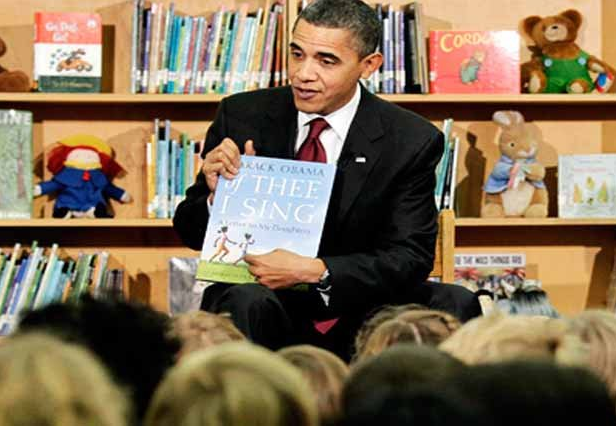
Photo: AP
President Obama came under fire this past week when he identified his inability to "tell a story" as the biggest mistake of his Presidency.  The President said, "When I think about what we’ve done well and what we haven’t done well, the mistake of my first term – couple of years – was thinking that this job was just about getting the policy right. And that’s important. But the nature of this office is also to tell a story to the American people that gives them a sense of unity and purpose and optimism, especially during tough times.  It’s funny – when I ran, everybody said, well he can give a good speech but can he actually manage the job? And in my first two years, I think the notion was, ‘Well, he’s been juggling and managing a lot of stuff, but where’s the story that tells us where he’s going?’ And I think that was a legitimate criticism."


The reaction diverged along the partisan divide.   


Mitt Romney reacted“President Obama believes that millions of Americans have lost their homes, their jobs and their livelihood because he failed to tell a good story. Being president is not about telling stories. Being president is about leading, and President Obama has failed to lead. No wonder Americans are losing faith in his presidency.”


Arianna Huffington defended Obama arguing that "telling stories, casting a narrative, is an essential element in communicating ideas and values, and an integral part of leading -- especially leading from the Oval Office."

Famed litigator Russ Herman teaches trial lawyers that "when you stand before a jury, you will tell a story. Every trial lawyer tells a story — with characters and themes and plots. Whether the story is one of murder and intrigue, of commercial disruption, or of a breach of contract, the elements of the story remain. It is, then, the art of the storyteller that determines if the jury “gets it.”"


The best stories, whether in politics or in the court room is when the listener gets to play a part as the hero.  Here, the Politician says, is the evil in our land, and here is your struggle, and together we can beat it.

Ronald Reagan, quoting from John Winthrop's 1630 Sermon, talked about America being the shining City on the Hill.  When he ran for re-election Reagan's story was that it was Morning Again in America.  Reagan was the Great Communicator simply because he could tell a story.  It helped immensely that by 1984 the economy was doing much better. Reagan wove his story into the fabric of American lore, inviting us not be as we are, but rather as we would like to see ourselves become.

Bill Clinton was a masterful story teller simply because his stories were also about us.  Yes, he was the man from Hope - a wonderful blend upon his personal history and campaign theme.  However Clinton's greatest stories were about average Americans struggling with problems that his policies claimed to help.  While Clinton's detractors mocked his  "I feel your pain," he understood the importance of stories.  He wrote, "Perhaps most important, I learned that everyone has a story – of dreams and nightmares, hope and heartache, love and loss, courage and fear, sacrifice and selfishness. All my life I’ve been interested in other people’s stories. I wanted to know them, understand them, feel them. When I grew up into politics, I always felt the main point of my work was to people a chance to have better stories."


In the end, both Romney and Huffington are correct.  The Presidency and politics is about story telling in order to gain support for policies.  However if the policies get implemented and don't work - don't blame the story.

Thursday, July 12, 2012

Political Marketing: Campaign Icons & Logos

Bringing Branding to Politics


Marketing is the combination of the art of psychology applied to the economics of buying and selling.  Students are taught that marketing involves deliberate decisions about product, placement, price, packaging, promotion, and people.  Political campaigns have always brought along songs, catch phrases, and themes.  "I like Ike" is perhaps the most memorable catch phrase.  


The gold standard of political icons is the Obama icon.  It conveys so many messages of Obama, the Sun, heartland, patriotism, and a new day of hope.  It is perfect and perhaps that explains why he uses it often and everywhere.  It is the first "non-name" logo for a Presidential Candidate that I can recall.  (If I am wrong please let me know in the comments.)

Campaign logos, or icons, have recently transformed from simple exercises in typesetting and graphic arts into a critical element of the campaign that conveys not just the identity, but the message of the candidate.  Bill Whittle has an excellent YouTube commentary on icons and their power in politics.


Mitt Romney has started to incorporate a message with his logo.  If you have to add a message to your logo, it may be a tacit admission that your logo doesn't convey the theme.  


It used to be so simple. The button and sign had to convey the candidate's name and that was it.

As we move forward in time, the campaign logo had a few basic rules:  (1) Prominently display the candidate's name; (2) Use Red, White and Blue - or some combination; and (3) Use images of stars, stripe or eagles or other such USA visuals.


Bill Clinton incorporated all of these elements in his campaigns for president.  His campaign logo is patriotic and incorporates a star in his name.  Note the use of angles, a road up so-to-speak - giving a dynamic "moving" quality to the logo.


In the 2000 election the Gore campaign is still in typesetting mode having a shooting star.  Further complicating the logo is that Vice-Presidential Candidate Joe Lieberman's name is so much longer leading to speculation that perhaps you should choose a running mate with a name not twice the size of your own.


During the 2004 campaign George W. Bush used the American Flag (no subtlety here) next to either his name or "W."  Again, just incorporating a little graphic arts to spruce things up.


Hillary Clinton continued the trend in her failed campaign for the nomination for the 2008 Democratic nomination.  Reminiscent of the Eisenhower campaign, she adopted the first-name basis, perhaps to distinguish her from prior Bill "Clinton" campaign messages.

Campaign and candidate icons and branding are here to stay and how well a campaign creates a logo indicates the sophistication and integration about its attention to detail with the campaign message.