Showing posts with label marketing. Show all posts

Monday, October 29, 2012

Temperament

It says a lot about who and where you think you are...

In general:

Candidates who are behind go on the attack.  
Candidates who are ahead stay positive.

Mitt Romney took a surprisingly subdued tone during the final Presidential Debate that focused on foreign policy.  With discontent and criticism mounting on the Administration's actions and statements over the terrorist attack on September 11, 2012 in Libya, Iran's continued pursuit of nuclear weapons, and the Fast and Furious debacle in Mexico - there was plenty of ammunition for Romney.  Following acrimonious tenor and attacks of the previous debates after Denver's first debate - many were surprised when Romney declined to attack Obama as forcefully.  

The only Romney attack that resembled the previous debates came when the Governor explained his characterization of the Obama's trip overseas as an Apology Tour:

"Mr. President, the reason I call it an apology tour is because you went to the Middle East and you flew to — to Egypt and to Saudi Arabia and to — to Turkey and Iraq. And — and by way, you skipped Israel, our closest friend in the region, but you went to the other nations. And by the way, they noticed that you skipped Israel. And then in those nations and on Arabic TV you said that America had been dismissive and derisive. You said that on occasion America had dictated to other nations. Mr. President, America has not dictated to other nations. We have freed other nations from dictators."

Sunday, October 14, 2012

Debate Performance I: A Report Card Checklist

How they do depends on eight factors

Entering into the final stretch of the 2012 Presidential Campaign, the debates are upon us.  Debates are common place in State and Federal elections at all levels.  Presidential Campaign Debates are an opportunity to see well-funded and well-prepared candidates bring on their A game in the most watched political debates of the year.  

The value of the debates derive from the format.  Two candidates meet in an unscripted, uncontrolled environment without tele-prompters, notes, or back up.  The debates often provide an insight into the candidate's temperament under pressure.  In truth we elect a candidate less because of their positions on past issues, but rather their character to handle unforeseen future issues.

Tuesday, September 18, 2012

Political Polls: Tea Leaves for the Campaign Manager

When they go your way - talk them up.
When they don't - invoke Harry S. Truman.

Political polls are the proverbial tea leaves of political campaigns and become news stories in their own right.  Political polls are difficult creatures particularly in Presidential Elections because the Electoral College System narrows the focus down to 18 swing states - five of which lean Democratic and five lean Republican.  National Presidential polls are, if not worthless, very limited in value because we do not elect the President based upon a national vote - something Al Gore ruefully notes at most speaking engagements. 


Tuesday, September 4, 2012

Use Meaningless Words II: Divisive

Rhetoric: Divisive proposals/policies are bad!
Reality: Big Issues can't be solved without upsetting someone - it means we have real choices

Divisive Defined: A derogatory label attached to an opponent's policies, proposals, or statements implying hostility, disdain, unwillingness to compromise, or callow disregard toward another group of people in an effort to create disunity, disharmony, and dissatisfaction. See also "wedge issues."  


When National Public Radio's Guy Raz asked Ari Shapiro how , Shapiro discussed the crowd's 


Discussing Paul Ryan's impact on Romney campaign events crowds, National Public Radio's Ari Shapiro told Guy Raz, "They really love Paul Ryan. They're passionate about this guy."

"What is it about Paul Ryan that gets them motivated?" Raz asked.
"They like the ideas he puts out," Shapiro said, "They like the budget, his willingness to not just criticize the other side, what the Democrats are doing, but put out proposals that are really controversial, that are, you know, very divisive in some ways, that have drawn a lot of criticism from Democrats. The Republicans I'm talking to see that as a badge of honor, and they think it was a bold decision of Romney to bring Ryan onto the ticket knowing that he's going to take all this incoming fire."
Political campaigns, and elections in particular, are - and should be - about competing policy ideas how to solve the issues of the day.  Some issues, especially important issues, cannot solved with universal consensus.  An election without differing proposed solutions and policies is an election with no meaningful choice at all. 

Still, it is a rhetorical device used across the political spectrum.  In his acceptance speech, Paul Ryan said, "You would think that any president, whatever his party, would make job creation, and nothing else, his first order of economic business.  But this president didn't do that. Instead, we got a long, divisive, all-or-nothing attempt to put the federal government in charge of health care."

Policies or proposals that target, favorably or unfavorably, one group over another are also labeled "divisive."  Two current examples:  

Proposals favoring one economic group over another, particularly in tax policy are labeled "divisive."  “'Congressman Cicilline engages in divisive class warfare where he tries to paint himself as someone who will stand up to the wealthy on behalf of the middle class,, said Doherty Campaign Manager Ian Prior."

Opposition Gay Marriage, particularly opposition, is labeled "divisive."  When Romney expressed support for traditional marriage, the Gay & Lesbian Alliance Against Defamation wrote, "If Gov. Romney truly desires to represent all Americans, Log Cabin Republicans encourages him to avoid divisive social issues and focus on jobs and the economy."

QUESTION:  Do you agree that "divisive" is an overused word in politics today?  What is an example you have seen where it was used correctly?

Tuesday, August 21, 2012

Exploit your Opponents Gaffes Part II:
Turn them into Fund Raising Opportunities
Updated 8/24/2012 9:51AM (See below)

Barely twelve hours had passed after GOP Missouri US Senate Candidate Todd Akins swerved into a political maelstrom with his "legitimate rape" comment, when Debbie Wasserman Shultz, the Democratic National Committee and Florida House Representative sent out emails to party faithful encouraging donations.

During a Sunday Morning show, The Jaco Report, on the Fox Station in Saint Louis, Candidate Akins was asked the predictable hard-facts-make-bad-law question about abortion in the event of rape.  It is a question asked of every Pro-Life candidate and should, according to Ann Coulter, be expect.  Rather than giving defensible prepared answers, Akins went completely off-script:

“From what I understand from doctors, that’s really rare,” Akin said. “If it’s a legitimate rape, the female body has ways to try to shut that whole thing down. But let’s assume that maybe that didn’t work or something, I think there should be some punishment, but the punishment ought to be of the rapist, and not attacking the child.”


Within twelve hours, the Democratic Party turned the gaffe into a fundraising opportunity.  Rep. Wasserman Shultz wrote:


In a year that has brought us no shortage of stunningly backward statements from Republicans on issues affecting women's health, the GOP Senate nominee from Missouri may have just taken the cake.


This morning, Rep. Todd Akin, explaining his opposition to abortion even in cases of rape, said that victims of "legitimate rape" don't get pregnant because "the female body has ways to try to shut that whole thing down."

What exactly, Rep. Akin, is an "illegitimate" rape? And what are these unnamed "ways" women have of avoiding pregnancy after being (legitimately) raped?

Now, Akin's choice of words isn't the real issue here. The real issue is a Republican party -- led by Mitt Romney and Paul Ryan -- whose policies on women and their health are dangerously wrong.

The email then invites recipients to donate to the Democratic Party.

Romney immediately disavowed Akins' statement, “Congressman’s Akin comments on rape are insulting, inexcusable, and, frankly, wrong.   Like millions of other Americans, we found them to be offensive.”

Akins for his part sought to quell the furor over his remarks, "This weekend I made a mistake. I used the wrong words in the wrong way. What I said was ill-conceived and it was wrong and for that I apologize. I’m a dad of two daughters and I want tough justice for sexual predators and I’ve always had a compassionate heart for the victims of sexual assault. 


The people from Missouri that elected me know I’m not perfect. We all make mistakes. When you make a mistake what you need to do is tell people you’re sorry. Don’t try and hide it. That’s why I have repeatedly said that I am very sorry for my comments.  Just because somebody makes a mistake doesn’t make them useless. We need a conservative in the United States Senate, and I am running to replace Claire McCaskill and get our country back on track.”

Unfortunately for Akins, what President Ronald Reagan said to Walter Mondale during the 1984 debate, in politics "if you are explaining; you are losing."


Akins' opponent, vulnerable US Senator Claire McCaskill, has also seized upon the gaffe seeking to raise money on the issue.  "Akin's record is riddled with policies and votes that hurt women. He thinks many forms of contraception — including the pill — should be illegal and voted against equal pay for equal work.  Together, we can make sure that Missouri has a Senator who has a proven track record of fighting for women."

A good gaffe, as discussed earlier, should further a perceived negative stereotype of the politician.  Here, an ardently pro-life Republican is painted as ignorant and hostile toward women.  This particular gaffe is so critical, in a swing state they may determine the balance of power in the Senate as well as Missouri's Electoral Votes, that Conservative leaders and pundits have called on Akins to withdraw so that another conservative candidate can face McCaskill.  


Saturday, July 28, 2012

Use Meaningless Words Part I: Special Interests

Use Meaningless Words Part I: Special Interests
Your Audience will fill in their own meanings


Adept politicians will use a stable of meaningless words that sound good, mean nothing, and allow the audience to fill in the meaning they prefer.  Few words meet this definition better than the pejorative term "special interests." 


The Actual Definition of a Special Interest:  Any interest group to which you do not belong that seeks furtherance of its particular interest through the political process by means of legislation or regulations supporting its goals, tax exemptions, or government funding. 

The Political Definition of a Special Interest: A narrow minded interest group that seeks favorable unjustified preferential regulations, taxes, legislation or funding at the expense of society as a whole.

Both Obama and Romney rail against "special interests" while at the same time supporting tax breaks and other government benefits for specific groups.  


The Obama Campaign
Barack Obama Campaign vows to fight "special interests" and seeks to paint challenger Mitt Romney as in league with these groups.  

June 2011:  "President Obama is asking four supporters to sit down to dinner with him—and one of them could be you. Consider this your invitation from the President:  I've set aside time for four supporters like you to join me for dinner.  Most campaigns fill their dinner guest lists primarily with Washington lobbyists and special interests.  We didn't get here doing that, and we're not going to start now. We're running a different kind of campaign. We don't take money from Washington lobbyists or special-interest PACs—we never have, and we never will."

Jim Messina, June 2012: "“ In 2010, the Supreme Court's decision in the Citizens United case opened the door to a new wave of so-called Super PACs—non-candidate political committees that can receive and spend unlimited money from special interests. For the first time, these committees could accept money from corporations, not just wealthy individuals.”

Jordan Carmon, August 2012: “I wanted to give to President Obama’s campaign because his is a grassroots campaign. President Obama has people coming around him. Mitt Romney has special interests coming around him. There’s a clear choice we have. And if we all do our part, our voices can’t be drowned out. I’m just trying to do my part.” (Quating "Jennifer" a Health Care Worker in New Hampshire.)

And most recently,  Barack Obama donated $5000.00 to his own campaign (for the first time) explaining in an email, "On its own, what I gave won't be enough to surmount the unprecedented fundraising we've seen on the other side, both from our opponent's campaign and from the outside groups and special interests supporting him."

The Romney Campaign


Mitt Romney derides special interests, "Democrats want to use the slowdown as an excuse to do what their special interests are always begging for: higher taxes, bigger government and less trade with other nations."

July 2012 - “Coming off the worst quarter of job creation in two years, and with the worst jobs record of any president in modern history, it’s clear President Obama has failed to live up to his promises. Yet President Obama is listening more to his campaign donors and special interest groups than to his own jobs council. That makes perfect sense for a president more concerned with re-election than getting the economy back on track.” –Andrea Saul, Romney Campaign Spokesperson.

April 2012 - “Less than four years after promising to drive special interests out of Washington, President Obama has done the exact opposite—granting top donors special favors and access to his White House. This is just another example of President Obama’s failed record, which he’ll be desperate to hide from voters this November.” –Andrea Saul, Romney Campaign Spokesperson.


Thursday, July 19, 2012

Political Marketing:  Tell a Story
Voters Connect with Stories not Policies
But a good story doesn't change bad outcomes

Photo: AP
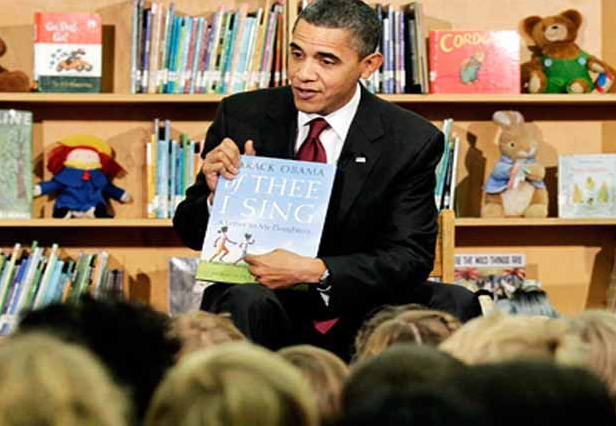
President Obama came under fire this past week when he identified his inability to "tell a story" as the biggest mistake of his Presidency.  The President said, "When I think about what we’ve done well and what we haven’t done well, the mistake of my first term – couple of years – was thinking that this job was just about getting the policy right. And that’s important. But the nature of this office is also to tell a story to the American people that gives them a sense of unity and purpose and optimism, especially during tough times.  It’s funny – when I ran, everybody said, well he can give a good speech but can he actually manage the job? And in my first two years, I think the notion was, ‘Well, he’s been juggling and managing a lot of stuff, but where’s the story that tells us where he’s going?’ And I think that was a legitimate criticism."


The reaction diverged along the partisan divide.   


Mitt Romney reacted, “President Obama believes that millions of Americans have lost their homes, their jobs and their livelihood because he failed to tell a good story. Being president is not about telling stories. Being president is about leading, and President Obama has failed to lead. No wonder Americans are losing faith in his presidency.”


Arianna Huffington defended Obama arguing that "telling stories, casting a narrative, is an essential element in communicating ideas and values, and an integral part of leading -- especially leading from the Oval Office."

Famed litigator Russ Herman teaches trial lawyers that "when you stand before a jury, you will tell a story. Every trial lawyer tells a story — with characters and themes and plots. Whether the story is one of murder and intrigue, of commercial disruption, or of a breach of contract, the elements of the story remain. It is, then, the art of the storyteller that determines if the jury “gets it.”"


The best stories, whether in politics or in the court room is when the listener gets to play a part as the hero.  Here, the Politician says, is the evil in our land, and here is your struggle, and together we can beat it.

Ronald Reagan, quoting from John Winthrop's 1630 Sermon, talked about America being the shining City on the Hill.  When he ran for re-election Reagan's story was that it was Morning Again in America.  Reagan was the Great Communicator simply because he could tell a story.  It helped immensely that by 1984 the economy was doing much better. Reagan wove his story into the fabric of American lore, inviting us not be as we are, but rather as we would like to see ourselves become.

Bill Clinton was a masterful story teller simply because his stories were also about us.  Yes, he was the man from Hope - a wonderful blend upon his personal history and campaign theme.  However Clinton's greatest stories were about average Americans struggling with problems that his policies claimed to help.  While Clinton's detractors mocked his  "I feel your pain," he understood the importance of stories.  He wrote, "Perhaps most important, I learned that everyone has a story – of dreams and nightmares, hope and heartache, love and loss, courage and fear, sacrifice and selfishness. All my life I’ve been interested in other people’s stories. I wanted to know them, understand them, feel them. When I grew up into politics, I always felt the main point of my work was to people a chance to have better stories."


In the end, both Romney and Huffington are correct.  The Presidency and politics is about story telling in order to gain support for policies.  However if the policies get implemented and don't work - don't blame the story.