Showing posts with label Reagan. Show all posts

Tuesday, August 14, 2012

Presidential Politics: Picking a Vice-President
Not much of a help in the end

Mitt Romney selected Wisconsin Representative Paul Ryan to be his Vice-President thankfully ending weeks of uninformed speculation about who he would pick.  The choice is often more symbolic than substantive in that it gives insight into the thinking process of the Presidential Candidate.  

Traditionally, the Vice-President Candidate should add assets where the Presidential candidate is lacking.  (Thus it can be an interesting window into the candidate's self-perceived weak spots.)  There are several areas where a Vice-President can augment the campaign in one or more ways:

  • Boosting the Outsider or Insider factor of the ticket.  Clinton (as Governor was an outsider) and he selected Al Gore.   Reagan selected George H.W. Bush.  Dukakis selected Lloyd Bentsen.  
  • Boosting the Ticket's Experience.  Younger, less experienced Presidential Candidates need an experienced elder statesman on the ticket.  Obama selected Joe Biden.   George W. Bush selected Dick Cheney.  Dukakis selected Lloyd Bentsen. 
  • Boosting a Political Faction's Representation.  Presidential Candidates may select a trusted member of the more liberal/conservative wing of their party in order secure their passionate support.  McCain (a moderate Republican) selected the more conservative Sarah Palin.  George HW Bush selected more conservative Dan Quayle.  Robert Dole selected more conservative Jack Kemp.  Ronald Reagan selected more moderate George HW Bush.  
  • Boost the Demographic Appeal.  Adding a Vice President of a particular demographic group may attract votes from that group.  McCain (2008) and Walter Mondale (1984) selected female Vice-Presidents, Sarah Palin and Geraldine Ferraro respectively.  
  • Boost State or Regional Appeal.  Adding a Politician from a different region, or a specific battle state may help Candidate do better in that location.  John Kerry (from the Northeast) selected John Edwards from North Carolina.  Dukakis (from the Northeast) selected Texan Lloyd Bentsen.  George HW Bush selected rust-belt Indiana Senator Dan Quayle.
  • Boost Party Unity.  It is not uncommon for the Presidential nominee to select one of his rivals for the nomination in order to unite the party.  Obama (2008) selected former rival Joe Biden.  John Kerry (2004) selected John Edwards.  Reagan (1980) selected former rival George HW Bush.  

Of all the above reasons, enhancing state or regional appeal appears to be the least effective rationale for selecting a Vice President.  States that trend toward one party or another typically stay that way.  John Edwards failed to carry his home state of North Carolina for Kerry in 2004.  George HW Bush still carried Texas despite Bentsen being on the opposite ticket.  (Although GHW Bush  hailed from Texas as well.)  

My personal assessment is that the Ryan pick by Romney boosts state and regional appeal as well as energizes the Tea Party faction of the GOP.  Ryan also adds insider Federal Government experience to the ticket.  It remains to be seen if the addition puts Wisconsin's ten electoral votes into play.  The addition comes at a possible cost:   Democratic Strategists believe Ryan's Medicare Proposals will alienate the Senior voters in Florida.  With 29 Electoral votes there are very few realistic paths to the necessary 270 Electoral votes needed to win for Romney.

QUESTION: Were you ever influenced for a candidate you otherwise would not have supported - because of the Vice Presidential pick?

Tuesday, July 24, 2012

Exploit Your Opponent's Gaffes
The Best Gaffes support a perceived negative stereotype

When Barack Obama went off script in Roanoke, Virginia justifying increased taxes on wealthy individuals and business owners.  Obama's message culminated with the following remarks, "If you were successful, somebody along the line gave you some help. There was a great teacher somewhere in your life. Somebody helped to create this unbelievable American system that we have that allowed you to thrive. Somebody invested in roads and bridges. If you've got a business. you didn't build that. Somebody else made that happen."


The Romney campaign pounced.  "It's insulting to every entrepreneur, every innovator," Mr. Romney said, calling the statement, "startling and revealing."  Painting the comment as a rare insight into Obama's true feelings about business.  "It wasn't a gaffe. It was his ideology. I don't think the president understands what makes this country great." Romney said at the Middlesex Truck and Coach, a small truck repair shop just outside Boston.  


The Obama Truth Team launched a curious rebuttal claiming Obama's comment was taken out of context.   


The Romney campaign now sells T-Shirts (for a $20.00 dollar donation) that read, "I built my business, Mr. President."  The campaign released an video response featuring Hudson New Hampshire's Jack Gilchrist of Gilchrist Metal Fabricating.  


Romney of course has given the Obama Campaign an equal amount, if not more, of gaffes.  Given the constant cycle of campaigning, but also the constant video of candidates from onlookers and opposition there are more to come.  Romney's gaffes play best when they enforce the image of him as the ultra-wealthy out-of-touch profiteer.  Romney gaffes likely to haunt him this election are (thus far):


  • Corporations are people, my friend.
  • I like being able to fire people.
  • I'm not concerned about the very poor.
  • $10,000.00 bet to Governor Perry
  • [My Wife] drives a couple of Cadillacs.


To be effective politically, gaffes must be consistent with the candidate's perceived negative stereotype.  The most common stereotype appears to be that the opposition is stupid.  Recent examples include George W. Bush, Sarah Palin, and Dan Quayle.  Ronald Reagan's detractors considered him feeble-minded and befuddled.   Any verbal misstep consistent with this stereotype is taken as an affirming event, while gaffes that are inconsistent are overlooked.


Sarah Palin demonstrated this with her posting on Facebook giving a "Thanksgiving Message to all 57 States."  The post actually recounted numerous Obama gaffes that have not received as much attention by virtue of the fact that Obama's stereotype is that he is very intelligent. 


Where do you come down on these gaffes?  Are they taking things out of context or are they rare truthful insights into the candidates real thoughts?


Thursday, July 19, 2012

Political Marketing:  Tell a Story
Voters Connect with Stories not Policies
But a good story doesn't change bad outcomes

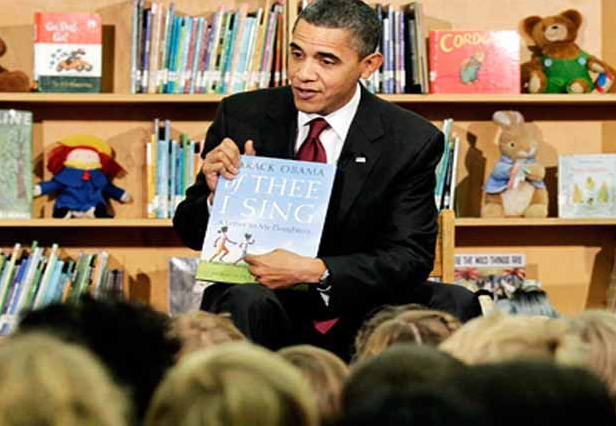
Photo: AP
President Obama came under fire this past week when he identified his inability to "tell a story" as the biggest mistake of his Presidency.  The President said, "When I think about what we’ve done well and what we haven’t done well, the mistake of my first term – couple of years – was thinking that this job was just about getting the policy right. And that’s important. But the nature of this office is also to tell a story to the American people that gives them a sense of unity and purpose and optimism, especially during tough times.  It’s funny – when I ran, everybody said, well he can give a good speech but can he actually manage the job? And in my first two years, I think the notion was, ‘Well, he’s been juggling and managing a lot of stuff, but where’s the story that tells us where he’s going?’ And I think that was a legitimate criticism."


The reaction diverged along the partisan divide.   


Mitt Romney reacted, “President Obama believes that millions of Americans have lost their homes, their jobs and their livelihood because he failed to tell a good story. Being president is not about telling stories. Being president is about leading, and President Obama has failed to lead. No wonder Americans are losing faith in his presidency.”


Arianna Huffington defended Obama arguing that "telling stories, casting a narrative, is an essential element in communicating ideas and values, and an integral part of leading -- especially leading from the Oval Office."

Famed litigator Russ Herman teaches trial lawyers that "when you stand before a jury, you will tell a story. Every trial lawyer tells a story — with characters and themes and plots. Whether the story is one of murder and intrigue, of commercial disruption, or of a breach of contract, the elements of the story remain. It is, then, the art of the storyteller that determines if the jury “gets it.”"


The best stories, whether in politics or in the court room is when the listener gets to play a part as the hero.  Here, the Politician says, is the evil in our land, and here is your struggle, and together we can beat it.

Ronald Reagan, quoting from John Winthrop's 1630 Sermon, talked about America being the shining City on the Hill.  When he ran for re-election Reagan's story was that it was Morning Again in America.  Reagan was the Great Communicator simply because he could tell a story.  It helped immensely that by 1984 the economy was doing much better. Reagan wove his story into the fabric of American lore, inviting us not be as we are, but rather as we would like to see ourselves become.

Bill Clinton was a masterful story teller simply because his stories were also about us.  Yes, he was the man from Hope - a wonderful blend upon his personal history and campaign theme.  However Clinton's greatest stories were about average Americans struggling with problems that his policies claimed to help.  While Clinton's detractors mocked his  "I feel your pain," he understood the importance of stories.  He wrote, "Perhaps most important, I learned that everyone has a story – of dreams and nightmares, hope and heartache, love and loss, courage and fear, sacrifice and selfishness. All my life I’ve been interested in other people’s stories. I wanted to know them, understand them, feel them. When I grew up into politics, I always felt the main point of my work was to people a chance to have better stories."


In the end, both Romney and Huffington are correct.  The Presidency and politics is about story telling in order to gain support for policies.  However if the policies get implemented and don't work - don't blame the story.