Thursday, July 19, 2012

Political Marketing:  Tell a Story
Voters Connect with Stories not Policies
But a good story doesn't change bad outcomes
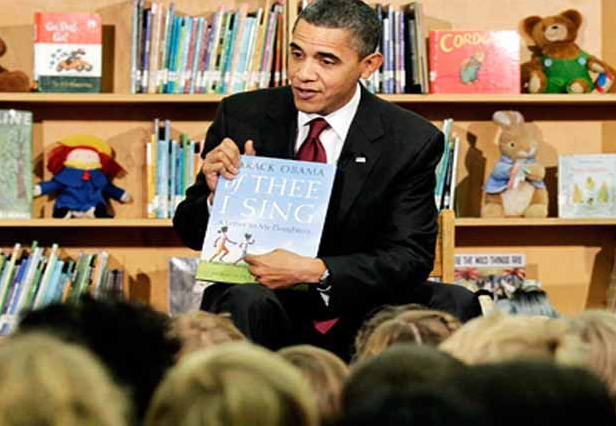
Photo: AP
President Obama came under fire this past week when he identified his inability to "tell a story" as the biggest mistake of his Presidency.  The President said, "When I think about what we’ve done well and what we haven’t done well, the mistake of my first term – couple of years – was thinking that this job was just about getting the policy right. And that’s important. But the nature of this office is also to tell a story to the American people that gives them a sense of unity and purpose and optimism, especially during tough times.  It’s funny – when I ran, everybody said, well he can give a good speech but can he actually manage the job? And in my first two years, I think the notion was, ‘Well, he’s been juggling and managing a lot of stuff, but where’s the story that tells us where he’s going?’ And I think that was a legitimate criticism."


The reaction diverged along the partisan divide.   


Mitt Romney reacted, “President Obama believes that millions of Americans have lost their homes, their jobs and their livelihood because he failed to tell a good story. Being president is not about telling stories. Being president is about leading, and President Obama has failed to lead. No wonder Americans are losing faith in his presidency.”


Arianna Huffington defended Obama arguing that "telling stories, casting a narrative, is an essential element in communicating ideas and values, and an integral part of leading -- especially leading from the Oval Office."

Famed litigator Russ Herman teaches trial lawyers that "when you stand before a jury, you will tell a story. Every trial lawyer tells a story — with characters and themes and plots. Whether the story is one of murder and intrigue, of commercial disruption, or of a breach of contract, the elements of the story remain. It is, then, the art of the storyteller that determines if the jury “gets it.”"


The best stories, whether in politics or in the court room is when the listener gets to play a part as the hero.  Here, the Politician says, is the evil in our land, and here is your struggle, and together we can beat it.

Ronald Reagan, quoting from John Winthrop's 1630 Sermon, talked about America being the shining City on the Hill.  When he ran for re-election Reagan's story was that it was Morning Again in America.  Reagan was the Great Communicator simply because he could tell a story.  It helped immensely that by 1984 the economy was doing much better. Reagan wove his story into the fabric of American lore, inviting us not be as we are, but rather as we would like to see ourselves become.

Bill Clinton was a masterful story teller simply because his stories were also about us.  Yes, he was the man from Hope - a wonderful blend upon his personal history and campaign theme.  However Clinton's greatest stories were about average Americans struggling with problems that his policies claimed to help.  While Clinton's detractors mocked his  "I feel your pain," he understood the importance of stories.  He wrote, "Perhaps most important, I learned that everyone has a story – of dreams and nightmares, hope and heartache, love and loss, courage and fear, sacrifice and selfishness. All my life I’ve been interested in other people’s stories. I wanted to know them, understand them, feel them. When I grew up into politics, I always felt the main point of my work was to people a chance to have better stories."


In the end, both Romney and Huffington are correct.  The Presidency and politics is about story telling in order to gain support for policies.  However if the policies get implemented and don't work - don't blame the story.

Tuesday, July 17, 2012

On Camera Self Criticism
Shamelessly engage in humblebrag


CBS Anchor Charlie Rose set up a predictable Kobayashi Maru, when he asked President Obama what he considered his biggest mistake during the first term.  This is now such a predictable question that politicians should be prepared how to answer this no win question.  Deny there were mistakes and you appear unrealistically unaware.  Admit mistakes and you provide video for your opponent's attack ads.  Worse, admit problems but blame them on others and you give the impression of someone evading accountability.

I believe the first time this question was sprung on a President was during a Presidential News Conference in April 2004 with President George W. Bush.  It was an election year.   Bush clearly did not anticipate the question and for forty-three seconds he appeared honestly at a loss for thoughts and words.  While he admitted - in the abstract - that he was sure he had made mistakes, he declared that he couldn't think of one right at that moment.  It was the fact he couldn't name one specific mistake that created headlines.

Later, President Bush was more prepared when asked this question two years later.  He immediately identified his earlier remark "Bring it on" when publicly talking about the Iraqi terrorist insurgents.  

It should then have come as now surprise to President Obama when Charlie Rose asked this same question.  President Obama seemed better prepared.  


When I think about what we’ve done well and what we haven’t done well,” the president said, “the mistake of my first term – couple of years – was thinking that this job was just about getting the policy right. And that’s important. But the nature of this office is also to tell a story to the American people that gives them a sense of unity and purpose and optimism, especially during tough times.
It’s funny – when I ran, everybody said, well he can give a good speech but can he actually manage the job? And in my first two years, I think the notion was, ‘Well, he’s been juggling and managing a lot of stuff, but where’s the story that tells us where he’s going?’ And I think that was a legitimate criticism.'"
Whether it was politically best choice to identify his inability to tell a story as his greatest mistake, the response perfectly fits the art of humblebrag.  Oliver Burkeman explains, a humblebrag is the art of answering in away that makes you look pretty darn fantastic.  "What is my biggest fault," a job seeker says.  "It must be that I work too hard."  Obama declares his policies and their implementation as spot on and flawless, but then places the blame on his inability to "tell a story." The reaction to this searing self-confessional makes clear that the answer needs to be refined to not trivialize the proffered mistake.


Thursday, July 12, 2012

Political Marketing: Campaign Icons & Logos

Bringing Branding to Politics


Marketing is the combination of the art of psychology applied to the economics of buying and selling.  Students are taught that marketing involves deliberate decisions about product, placement, price, packaging, promotion, and people.  Political campaigns have always brought along songs, catch phrases, and themes.  "I like Ike" is perhaps the most memorable catch phrase.  


The gold standard of political icons is the Obama icon.  It conveys so many messages of Obama, the Sun, heartland, patriotism, and a new day of hope.  It is perfect and perhaps that explains why he uses it often and everywhere.  It is the first "non-name" logo for a Presidential Candidate that I can recall.  (If I am wrong please let me know in the comments.)

Campaign logos, or icons, have recently transformed from simple exercises in typesetting and graphic arts into a critical element of the campaign that conveys not just the identity, but the message of the candidate.  Bill Whittle has an excellent YouTube commentary on icons and their power in politics.


Mitt Romney has started to incorporate a message with his logo.  If you have to add a message to your logo, it may be a tacit admission that your logo doesn't convey the theme.  


It used to be so simple. The button and sign had to convey the candidate's name and that was it.

As we move forward in time, the campaign logo had a few basic rules:  (1) Prominently display the candidate's name; (2) Use Red, White and Blue - or some combination; and (3) Use images of stars, stripe or eagles or other such USA visuals.


Bill Clinton incorporated all of these elements in his campaigns for president.  His campaign logo is patriotic and incorporates a star in his name.  Note the use of angles, a road up so-to-speak - giving a dynamic "moving" quality to the logo.


In the 2000 election the Gore campaign is still in typesetting mode having a shooting star.  Further complicating the logo is that Vice-Presidential Candidate Joe Lieberman's name is so much longer leading to speculation that perhaps you should choose a running mate with a name not twice the size of your own.


During the 2004 campaign George W. Bush used the American Flag (no subtlety here) next to either his name or "W."  Again, just incorporating a little graphic arts to spruce things up.


Hillary Clinton continued the trend in her failed campaign for the nomination for the 2008 Democratic nomination.  Reminiscent of the Eisenhower campaign, she adopted the first-name basis, perhaps to distinguish her from prior Bill "Clinton" campaign messages.

Campaign and candidate icons and branding are here to stay and how well a campaign creates a logo indicates the sophistication and integration about its attention to detail with the campaign message.


Tuesday, July 10, 2012

Re-Framing The Issue
Make the topic about what you want it to be - not what it is to others

Following the highly anticipated Health Care Decision by the United States Supreme Court, President Obama took to the cameras and said, "Good afternoon. Earlier today, the Supreme Court upheld the constitutionality of the Affordable Care Act — the name of the health care reform we passed two years ago. In doing so, they’ve reaffirmed a fundamental principle that here in America - in the wealthiest nation on Earth - no illness or accident should lead to any family’s financial ruin.  (Emphasis Supplied)

Yet that wasn’t the issue or the principle before the Supreme Court.  The Decision itself states at the outset,  "We do not consider whether the Act embodies sound policies. That judgment is entrusted to the Nation’s elected leaders. We ask only whether Congress has the power under the Constitution to enact the challenged provisions … In this case we must again determine whether the Constitution grants Congress powers it now asserts, but which many States and individuals believe it does not possess."


Focusing just on the individual mandate, that is, the law’s requirement that each individual purchase health insurance, the issue, and therefore the principle before the United States Supreme Court was really a simple question: What Part of the Constitution did Congress rely upon to pass the individual mandate?


 It is a question that perplexed even elected members of Congress: 


In the oral arguments before the Supreme Court on the mandate, there were only two possible arguments.  The first, and primary argument of the government was that Congress’ power to regulate interstate commerce gave them the power to require participation in the market.  The second, almost an after thought argument, was that Congress’ power to tax gave it the power to “take” money from individuals who did not purchase insurance.  It was the latter argument that prevailed. 

Mitt Romney provided a more nuanced reaction to the decision,  “Let's make clear that we understand what the court did and did not do," he said. "What the court did today was say that Obamacare does not violate the Constitution. What they did not do is say that Obamacare is good law or that it's good policy."

 With such parsing, he may have scored points with Constitutional Scholars and other intellectual purists, but he lost an opportunity to speak to the average voter who, with Obama’s encouragement, may consider the decision to be an endorsement of the his political aims.