Showing posts with label Framing the Issue. Show all posts

Tuesday, September 25, 2012

The Battle for Middle Earth

Only True Partisans think the other side are Orcs

Lost in the critique of the purloined video recording of Mitt Romney's comments to wealthy donors released last week, was his explanation why the campaign did not more aggressively attack Obama as a corrupt failure.  Romney (correctly) explained that elections are won by attracting the five to seven percent of uncommitted voters that are open to changing their prior votes.

Romney then gave a fascinating insight into his campaign's thinking about which message best sells to this critical audience:


Saturday, July 28, 2012

Use Meaningless Words Part I: Special Interests

Use Meaningless Words Part I: Special Interests
Your Audience will fill in their own meanings


Adept politicians will use a stable of meaningless words that sound good, mean nothing, and allow the audience to fill in the meaning they prefer.  Few words meet this definition better than the pejorative term "special interests." 


The Actual Definition of a Special Interest:  Any interest group to which you do not belong that seeks furtherance of its particular interest through the political process by means of legislation or regulations supporting its goals, tax exemptions, or government funding. 

The Political Definition of a Special Interest: A narrow minded interest group that seeks favorable unjustified preferential regulations, taxes, legislation or funding at the expense of society as a whole.

Both Obama and Romney rail against "special interests" while at the same time supporting tax breaks and other government benefits for specific groups.  


The Obama Campaign
Barack Obama Campaign vows to fight "special interests" and seeks to paint challenger Mitt Romney as in league with these groups.  

June 2011:  "President Obama is asking four supporters to sit down to dinner with him—and one of them could be you. Consider this your invitation from the President:  I've set aside time for four supporters like you to join me for dinner.  Most campaigns fill their dinner guest lists primarily with Washington lobbyists and special interests.  We didn't get here doing that, and we're not going to start now. We're running a different kind of campaign. We don't take money from Washington lobbyists or special-interest PACs—we never have, and we never will."

Jim Messina, June 2012: "“ In 2010, the Supreme Court's decision in the Citizens United case opened the door to a new wave of so-called Super PACs—non-candidate political committees that can receive and spend unlimited money from special interests. For the first time, these committees could accept money from corporations, not just wealthy individuals.”

Jordan Carmon, August 2012: “I wanted to give to President Obama’s campaign because his is a grassroots campaign. President Obama has people coming around him. Mitt Romney has special interests coming around him. There’s a clear choice we have. And if we all do our part, our voices can’t be drowned out. I’m just trying to do my part.” (Quating "Jennifer" a Health Care Worker in New Hampshire.)

And most recently,  Barack Obama donated $5000.00 to his own campaign (for the first time) explaining in an email, "On its own, what I gave won't be enough to surmount the unprecedented fundraising we've seen on the other side, both from our opponent's campaign and from the outside groups and special interests supporting him."

The Romney Campaign


Mitt Romney derides special interests, "Democrats want to use the slowdown as an excuse to do what their special interests are always begging for: higher taxes, bigger government and less trade with other nations."

July 2012 - “Coming off the worst quarter of job creation in two years, and with the worst jobs record of any president in modern history, it’s clear President Obama has failed to live up to his promises. Yet President Obama is listening more to his campaign donors and special interest groups than to his own jobs council. That makes perfect sense for a president more concerned with re-election than getting the economy back on track.” –Andrea Saul, Romney Campaign Spokesperson.

April 2012 - “Less than four years after promising to drive special interests out of Washington, President Obama has done the exact opposite—granting top donors special favors and access to his White House. This is just another example of President Obama’s failed record, which he’ll be desperate to hide from voters this November.” –Andrea Saul, Romney Campaign Spokesperson.


Thursday, July 19, 2012

Political Marketing:  Tell a Story
Voters Connect with Stories not Policies
But a good story doesn't change bad outcomes

Photo: AP
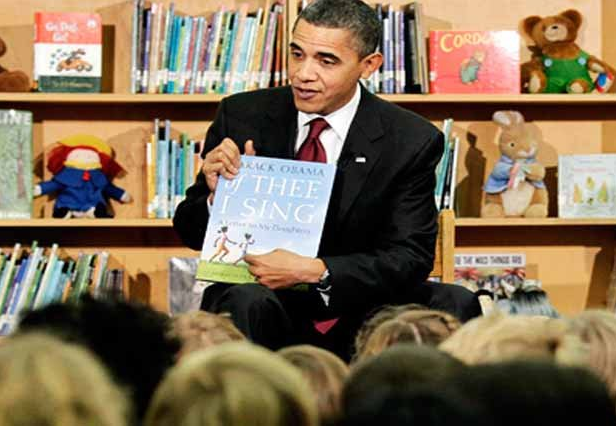
President Obama came under fire this past week when he identified his inability to "tell a story" as the biggest mistake of his Presidency.  The President said, "When I think about what we’ve done well and what we haven’t done well, the mistake of my first term – couple of years – was thinking that this job was just about getting the policy right. And that’s important. But the nature of this office is also to tell a story to the American people that gives them a sense of unity and purpose and optimism, especially during tough times.  It’s funny – when I ran, everybody said, well he can give a good speech but can he actually manage the job? And in my first two years, I think the notion was, ‘Well, he’s been juggling and managing a lot of stuff, but where’s the story that tells us where he’s going?’ And I think that was a legitimate criticism."


The reaction diverged along the partisan divide.   


Mitt Romney reacted, “President Obama believes that millions of Americans have lost their homes, their jobs and their livelihood because he failed to tell a good story. Being president is not about telling stories. Being president is about leading, and President Obama has failed to lead. No wonder Americans are losing faith in his presidency.”


Arianna Huffington defended Obama arguing that "telling stories, casting a narrative, is an essential element in communicating ideas and values, and an integral part of leading -- especially leading from the Oval Office."

Famed litigator Russ Herman teaches trial lawyers that "when you stand before a jury, you will tell a story. Every trial lawyer tells a story — with characters and themes and plots. Whether the story is one of murder and intrigue, of commercial disruption, or of a breach of contract, the elements of the story remain. It is, then, the art of the storyteller that determines if the jury “gets it.”"


The best stories, whether in politics or in the court room is when the listener gets to play a part as the hero.  Here, the Politician says, is the evil in our land, and here is your struggle, and together we can beat it.

Ronald Reagan, quoting from John Winthrop's 1630 Sermon, talked about America being the shining City on the Hill.  When he ran for re-election Reagan's story was that it was Morning Again in America.  Reagan was the Great Communicator simply because he could tell a story.  It helped immensely that by 1984 the economy was doing much better. Reagan wove his story into the fabric of American lore, inviting us not be as we are, but rather as we would like to see ourselves become.

Bill Clinton was a masterful story teller simply because his stories were also about us.  Yes, he was the man from Hope - a wonderful blend upon his personal history and campaign theme.  However Clinton's greatest stories were about average Americans struggling with problems that his policies claimed to help.  While Clinton's detractors mocked his  "I feel your pain," he understood the importance of stories.  He wrote, "Perhaps most important, I learned that everyone has a story – of dreams and nightmares, hope and heartache, love and loss, courage and fear, sacrifice and selfishness. All my life I’ve been interested in other people’s stories. I wanted to know them, understand them, feel them. When I grew up into politics, I always felt the main point of my work was to people a chance to have better stories."


In the end, both Romney and Huffington are correct.  The Presidency and politics is about story telling in order to gain support for policies.  However if the policies get implemented and don't work - don't blame the story.

Tuesday, July 17, 2012

On Camera Self Criticism
Shamelessly engage in humblebrag


CBS Anchor Charlie Rose set up a predictable Kobayashi Maru, when he asked President Obama what he considered his biggest mistake during the first term.  This is now such a predictable question that politicians should be prepared how to answer this no win question.  Deny there were mistakes and you appear unrealistically unaware.  Admit mistakes and you provide video for your opponent's attack ads.  Worse, admit problems but blame them on others and you give the impression of someone evading accountability.

I believe the first time this question was sprung on a President was during a Presidential News Conference in April 2004 with President George W. Bush.  It was an election year.   Bush clearly did not anticipate the question and for forty-three seconds he appeared honestly at a loss for thoughts and words.  While he admitted - in the abstract - that he was sure he had made mistakes, he declared that he couldn't think of one right at that moment.  It was the fact he couldn't name one specific mistake that created headlines.

Later, President Bush was more prepared when asked this question two years later.  He immediately identified his earlier remark "Bring it on" when publicly talking about the Iraqi terrorist insurgents.  

It should then have come as now surprise to President Obama when Charlie Rose asked this same question.  President Obama seemed better prepared.  


When I think about what we’ve done well and what we haven’t done well,” the president said, “the mistake of my first term – couple of years – was thinking that this job was just about getting the policy right. And that’s important. But the nature of this office is also to tell a story to the American people that gives them a sense of unity and purpose and optimism, especially during tough times.
It’s funny – when I ran, everybody said, well he can give a good speech but can he actually manage the job? And in my first two years, I think the notion was, ‘Well, he’s been juggling and managing a lot of stuff, but where’s the story that tells us where he’s going?’ And I think that was a legitimate criticism.'"
Whether it was politically best choice to identify his inability to tell a story as his greatest mistake, the response perfectly fits the art of humblebrag.  Oliver Burkeman explains, a humblebrag is the art of answering in away that makes you look pretty darn fantastic.  "What is my biggest fault," a job seeker says.  "It must be that I work too hard."  Obama declares his policies and their implementation as spot on and flawless, but then places the blame on his inability to "tell a story." The reaction to this searing self-confessional makes clear that the answer needs to be refined to not trivialize the proffered mistake.